
In the world of filmmaking, where imagination meets reality, the art of storytelling often hinges on a single, pivotal tool: the storyboard. This seemingly humble sequence of sketches serves as a filmmaker’s blueprint, transforming intricate narratives into vivid visual journeys. Before the cameras roll and the magic unfolds on screen, storyboards play a crucial role in unraveling the complexities of a scene, guiding directors, cinematographers, and production teams through the labyrinth of creative possibilities. By bridging the gap between concept and execution, storyboarding not only clarifies vision but also ensures that every frame resonates with the intended impact. In this exploration, we delve into how storyboarding shapes the visualization of complex scenes, illuminating the path from script to screen with precision and creativity.
Crafting Clarity: The Art of Storyboarding for Intricate Scenes
In the realm of filmmaking, storyboarding serves as a vital blueprint, transforming abstract ideas into tangible visual narratives. For scenes that weave intricate storylines or demand complex choreography, storyboards become the director’s compass, ensuring clarity and cohesion. Through detailed sketches and annotations, filmmakers can pre-visualize sequences, allowing them to dissect each frame with precision and foresight.
Benefits of Storyboarding for Complex Scenes:
- Enhanced Communication: Provides a visual language that bridges the gap between directors, cinematographers, and crew.
- Efficient Planning: Identifies potential challenges and logistical needs before stepping on set.
- Creative Exploration: Encourages experimentation with angles, lighting, and pacing to refine the storytelling.

Visual Narratives: Translating Complexity into Coherent Storyboards
In the realm of filmmaking, storyboards serve as the blueprint for translating intricate concepts into visual clarity. They break down elaborate sequences into digestible frames, allowing directors and cinematographers to pre-visualize the narrative flow. This process not only aids in aligning the creative vision among team members but also highlights potential challenges before the cameras start rolling. By sketching out each scene, filmmakers can ensure that every shot contributes to the overall storytelling, maintaining coherence amidst complexity.
- Visual Consistency: Storyboards help maintain a consistent visual style throughout the film.
- Efficient Communication: Provides a visual language for discussing scenes and sequences.
- Problem Identification: Identifies potential issues in scene transitions and compositions.
These illustrated guides act as a roadmap, transforming abstract ideas into tangible sequences. The meticulous planning they enable can lead to a more focused production process, ultimately saving time and resources. With storyboards, the daunting task of visualizing complex scenes becomes a structured, creative endeavor.
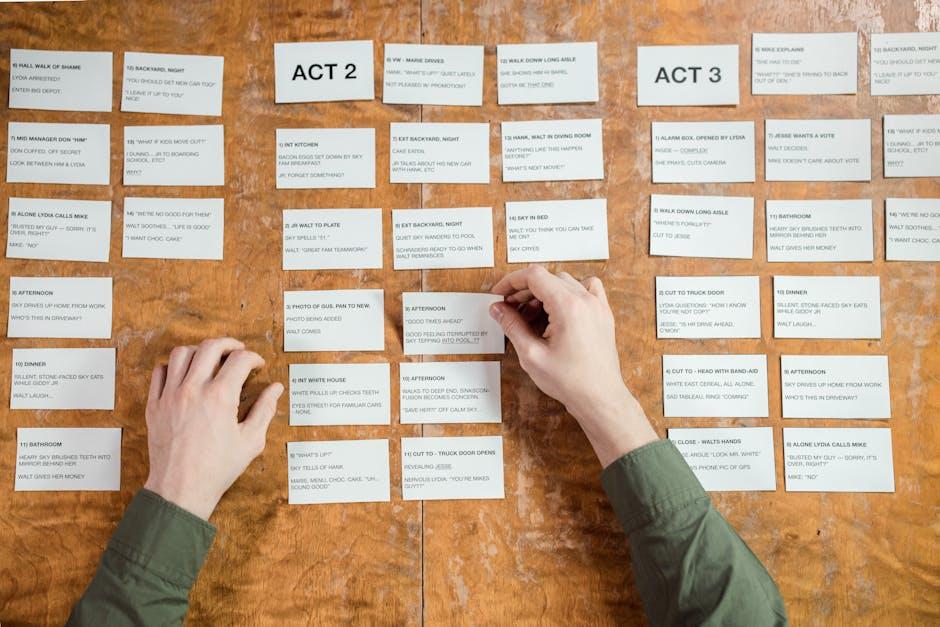
Mastering Detail: Techniques for Effective Scene Visualization
In the realm of filmmaking, the meticulous craft of scene visualization is akin to painting a canvas with layers of intricate detail. Storyboarding serves as the filmmaker’s blueprint, transforming abstract ideas into concrete imagery. By sketching out each shot, directors and cinematographers can explore the depth of their scenes, ensuring that every frame contributes to the narrative’s emotional and visual impact.
- Clarity and Precision: Storyboards help in clarifying complex scenes, offering a clear vision of camera angles, lighting, and character placement.
- Creative Exploration: They provide a playground for experimentation, allowing filmmakers to test different perspectives and visual styles before committing to a final decision.
- Efficient Communication: A storyboard acts as a common language among the crew, ensuring that everyone from the director to the set designer shares the same vision.
Through the art of storyboarding, the chaotic process of filmmaking is distilled into a coherent plan, paving the way for a seamless transition from imagination to reality.

From Concept to Canvas: Recommendations for Successful Storyboarding
Transitioning from a mere idea to a tangible storyboard requires a blend of creativity and precision. Begin by sketching out the key scenes that encapsulate the essence of your narrative. This is your chance to experiment with various angles, compositions, and character placements. A well-thought-out storyboard not only helps in visualizing the flow but also serves as a blueprint for your entire production.
Consider these recommendations for a successful storyboarding process:
- Define your objectives: Clearly outline the purpose and message of each scene.
- Embrace simplicity: Use basic shapes and lines to convey movement and emotion.
- Incorporate feedback: Engage with your team to refine and enhance the visual narrative.
- Utilize software tools: Leverage digital platforms for a more flexible and editable storyboard.
By carefully crafting each panel, you lay the groundwork for a seamless transition from imagination to on-screen reality.


